Predict
The body is predictive.
Pain and restriction are often learned protective strategies. The assessment has to include what the system expects, not just what the joint can do.
Loading

Live online workshop - $27 USD
Learn how to assess whether your client's issue is physical, mental, or emotional - and how to use tension, breath, and movement to help them express force more safely, adapt to stress, and stop repeating the same patterns.
Live workshop + replay access
Sound familiar?
A client can complete the rep and still be doing the movement from fear, compensation, bracing, shutdown, or survival. Most coaches are still trying to solve that deeper problem with better exercise selection.

Real coaching decisions, not abstract theory.
The issue is not always the exercise. It is how the client is organizing tension.
It is how they are breathing, bracing, protecting, or shutting down under stress.
It is whether they feel safe enough to express force instead of just survive the rep.
It is whether the issue is showing up more physically, mentally, or emotionally.
Different clients can hit the same position and use completely different internal strategies.
The philosophy shift
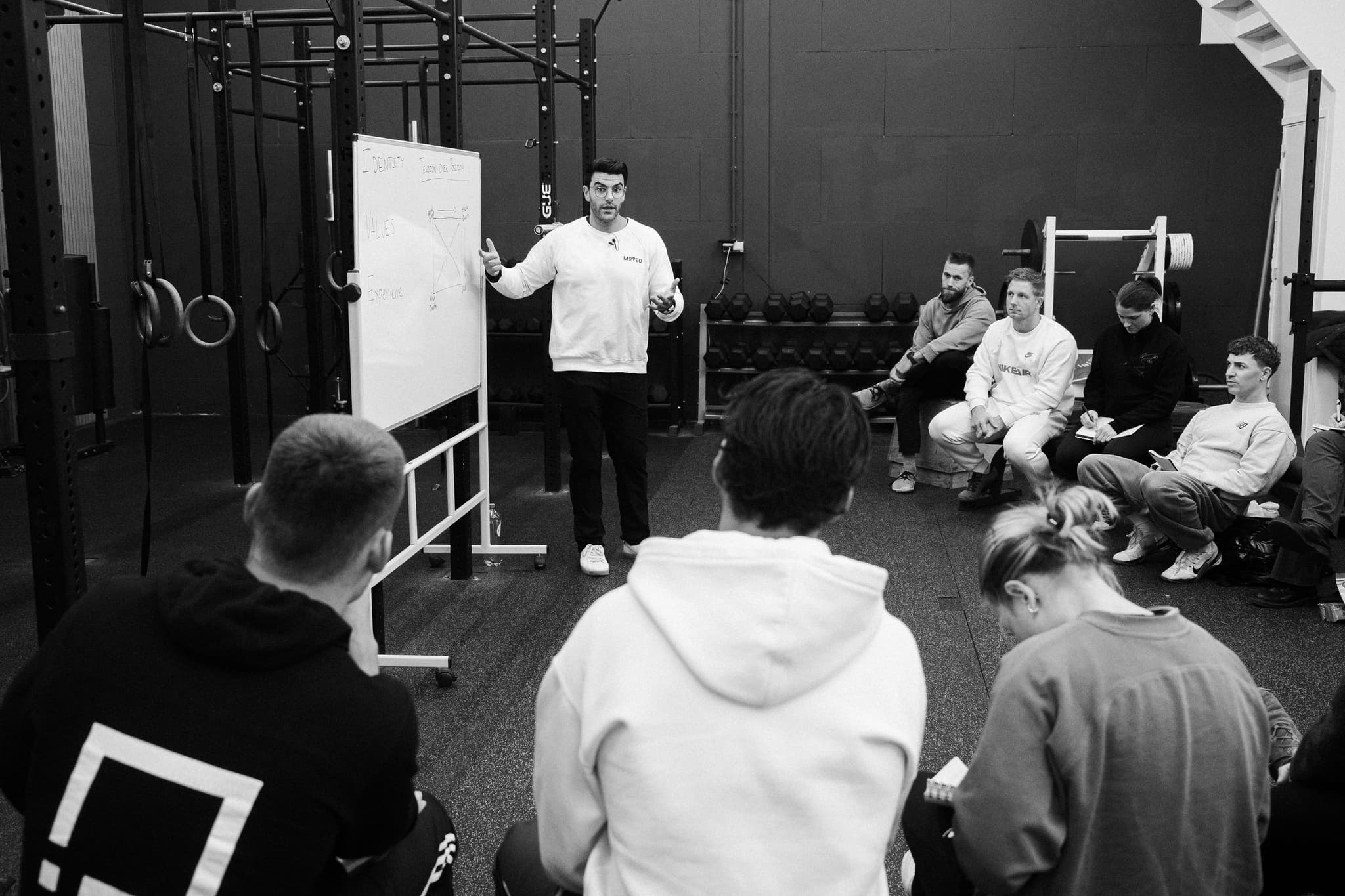
We look at how the body observes, predicts, and experiences stress. The exercise is the byproduct. The real objective is the stimulus and how the human responds to it.

Predict
Pain and restriction are often learned protective strategies. The assessment has to include what the system expects, not just what the joint can do.
Stimulus
Exercise is the byproduct. The real work is choosing the stimulus and reading how the human responds to it.
Tension
A clean position means very little if the client cannot breathe, feel safe, express, and produce force there.
Stress
The question is whether the client needs more safety, more confidence, or more performance in the moment in front of you.
Is this problem showing up physically, mentally, or emotionally?
Does this client need more safety, confidence, or performance?
Are they expressing force, or just enduring the stimulus?
Are they using the right tension, or displacing it somewhere else?
What you will learn
Inside this workshop, you will learn how to look deeper than what the body did and assess how the body did it.
How to assess whether a client's issue is showing up more physically, mentally, or emotionally.
How to identify whether a client needs more safety, confidence, or performance.
Why the body needs physical expression to move through stress, behavioral issues, and nervous system dysregulation.
How to look at movement through tension instead of chasing positions.
How breath changes output, tension, mobility, and perceived safety.
How to tell whether a client is winning against a stimulus or just enduring it.
How to understand compensation patterns through force transfer, torque chains, and stress response.
Why what you give a client matters less than how they are doing it.

What this changes in your coaching
After this workshop, you will start seeing why different clients can do the same exercise and get completely different results.
Where tension is being lost.
Where stress is being displaced.
When a client is mentally quitting before they are physically done.
When emotion is shaping movement quality.
When the body is protecting instead of expressing.
You will coach with a clearer lens. You will make better decisions.
Included with enrollment
The value is not in more content. It is in a clearer framework you can bring back to real clients, real assessments, and real coaching decisions.

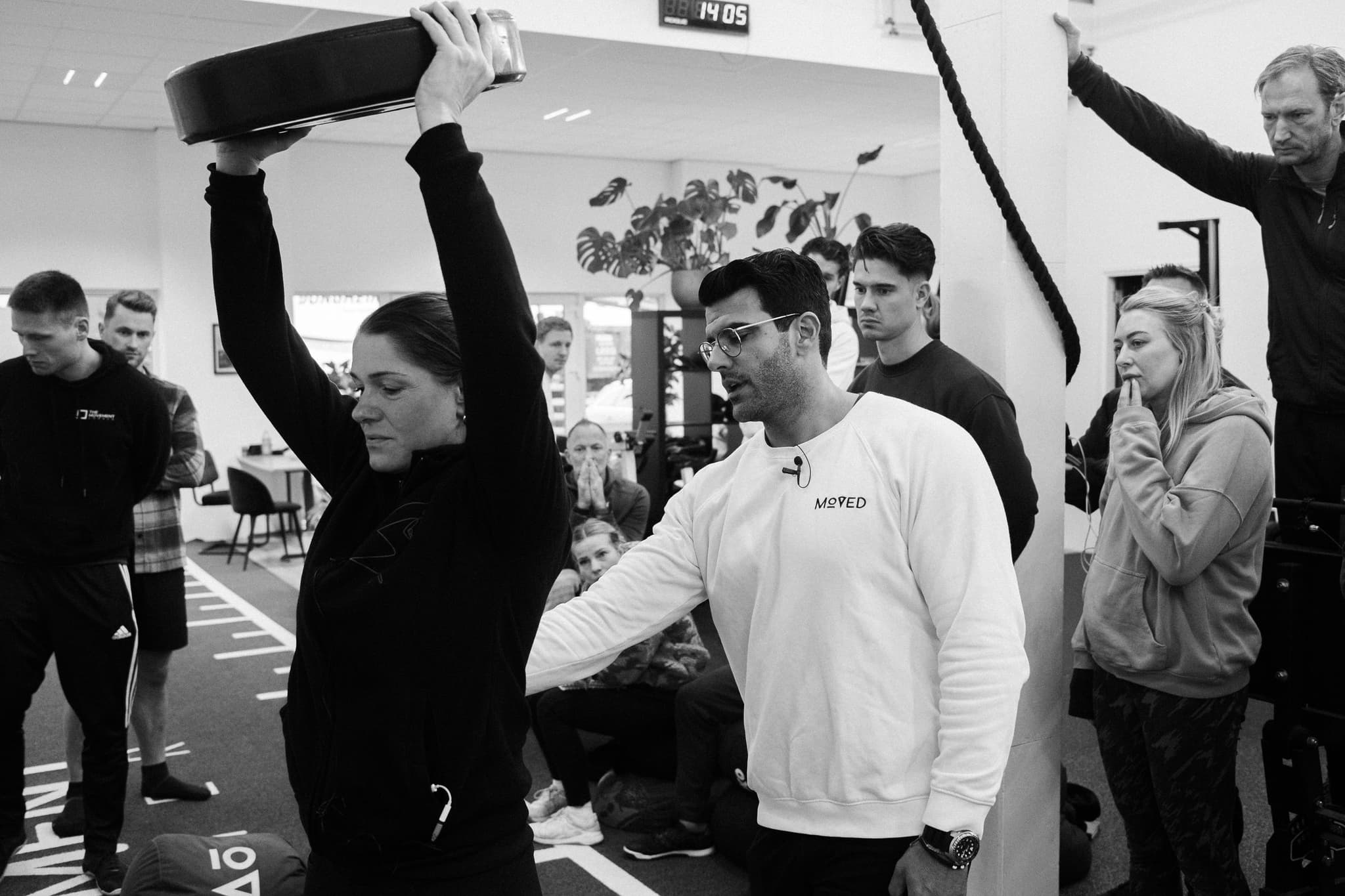
A direct teaching session built for coaches who want the lens, not a pile of random drills.
Revisit the framework, language, and coaching decisions after the live session.
$149 value included with your workshop enrollment.
A clean reference for the ideas that shape Moved Academy's coaching model.
Who this is for
This is for coaches who already care about movement, but want a cleaner read on why a client braces, protects, compensates, loses force, or keeps running into the same wall.

Founder
Moved Academy
Why Moved Academy
Moved Academy uses movement as a tool to help humans adapt positively to stress and express themselves more fully.
This work blends nervous system understanding, breath, tension, torque chains, movement assessment, and practical coaching application into a system that helps coaches stop chasing symptoms and start understanding the deeper pattern.

Start here
You need to understand what is actually happening in front of you. If you want a better lens for pain, compensation, nervous system dysregulation, tension, and force expression, this workshop is your entry point.